🌪️ HOW HURRICANE WINDS DAMAGE ROOFS IN JACKSONVILLE, FL (AND WHAT YOU CAN DO ABOUT IT)3
🌪️ HOW HURRICANE WINDS DAMAGE ROOFS IN JACKSONVILLE, FL (AND WHAT YOU CAN DO ABOUT IT)
Introduction
Hurricane winds are one of the most destructive forces affecting homes in Jacksonville and throughout Northeast Florida. Even when a storm does not make direct landfall, outer bands and tropical wind systems can produce sustained gusts strong enough to compromise roofing systems across entire neighborhoods.
Every hurricane season, roofing contractors see the same pattern: roofs that looked perfectly fine before the storm suddenly suffer widespread shingle loss, leaks, or structural damage afterward.
At Morgan Conley Roofing and Repair LLC, we help homeowners understand not just what hurricane winds do to roofs—but why certain roofs fail while others remain intact.
The difference almost always comes down to preparation, installation quality, and existing roof condition.
Understanding How Hurricane Winds Impact Roofing Systems
To understand wind damage, you first have to understand how wind interacts with a roof.
Wind does not simply “push” against a roof—it creates pressure differences. When wind flows over a structure, it produces a lifting force on the roof surface. This is similar to how airplane wings generate lift.
As wind speeds increase, this lifting force becomes stronger, especially at roof edges, corners, and seams.
Once wind gets under a roofing material, it can rapidly expand damage across the entire system.
Why Roof Edges Are the Most Vulnerable
Most hurricane-related roof damage begins at the perimeter of the roof. This includes:
Roof corners
Eaves and edges
Ridge lines
Transition points
These areas experience the highest wind pressure variation. Once a single shingle or flashing section loosens, wind can enter beneath the roofing layer and begin peeling materials back like a wave.
This is why properly installed drip edges, starter shingles, and underlayment systems are critical in Florida roofing construction.
How Shingle Roofs Fail During Hurricane Winds
Asphalt shingle roofs are the most common roofing system in Jacksonville, but they are also highly dependent on proper installation and material condition.
During hurricane winds, shingle failure typically happens in stages:
Stage 1: Edge Lift
Wind begins lifting the outer edges of shingles that are already weakened or aging.
Stage 2: Adhesive Failure
Once seal strips break or degrade, shingles lose their wind resistance and become more vulnerable to lifting.
Stage 3: Progressive Tear-Off
Wind enters beneath the lifted shingle, increasing pressure and pulling adjacent shingles loose.
Stage 4: Deck Exposure
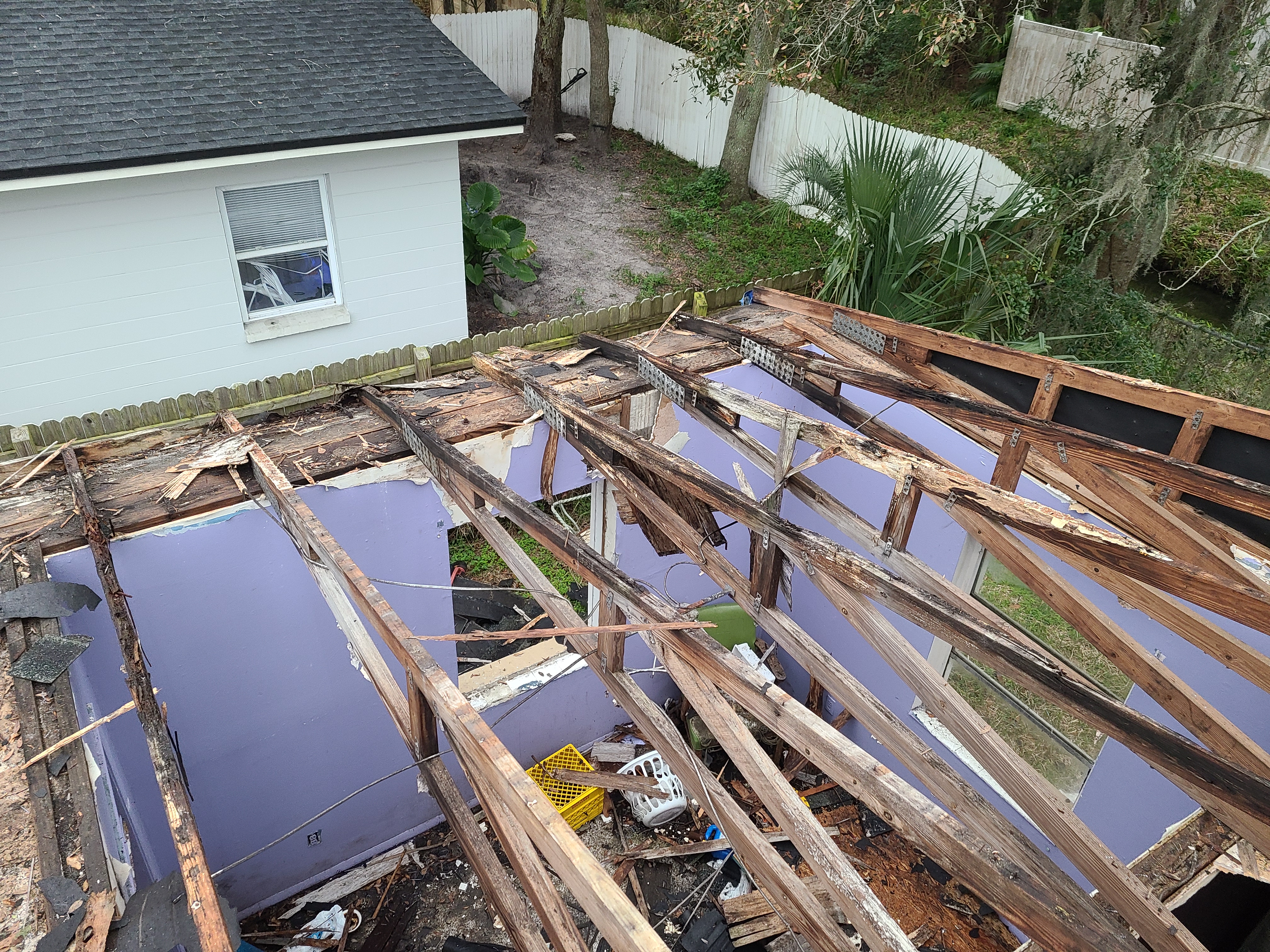
Once enough shingles are removed, the roof decking is exposed to direct rain, leading to leaks and water intrusion.
Even a small section of failure can quickly escalate into large-scale roof damage.
The Role of Roofing Installation Quality
One of the most overlooked factors in hurricane resistance is installation quality.
Two roofs built with the same materials can perform very differently in a storm depending on how they were installed.
Critical installation factors include:
Proper nail placement and spacing
Correct underlayment installation
Starter strip sealing
Flashing integration
Decking condition before installation
Improper installation creates weak points that may not fail immediately—but will fail under storm stress.
This is one of the reasons Florida building codes have become stricter over time, especially in coastal regions like Jacksonville.
How Wind-Driven Rain Makes Damage Worse
Hurricane damage is not just caused by wind—it is amplified by rain.
Wind-driven rain can penetrate areas that would normally stay dry. When rain is forced sideways or upward under pressure, it can enter through:
Nail holes
Loose flashing
Shingle overlaps
Ridge vents
Small roof penetrations
Once water enters the system, it can travel horizontally through insulation and decking before becoming visible inside the home.
This is why interior leaks often appear far from the actual roof damage point.
The Hidden Danger of “Invisible” Wind Damage
One of the most dangerous aspects of hurricane roof damage is that it is not always immediately visible.
A roof may appear intact from the ground, but still have:
Lifted shingles that reseal temporarily
Compromised flashing
Weakened seal strips
Micro-tears in underlayment
These issues often go unnoticed until the next storm event, when the damage worsens significantly.
This is why post-storm inspections are just as important as pre-storm preparation.
Why Some Roofs Survive Hurricanes Better Than Others
Not all roofs respond the same way to hurricane conditions. Several factors determine performance:
1. Roof Age
Older roofs are more likely to fail due to material degradation.
2. Material Type
Metal roofs generally perform better in high winds compared to older shingle systems.
3. Installation Quality
Properly installed roofs with modern hurricane-rated materials perform significantly better.
4. Maintenance History
Roofs that are regularly inspected and repaired have fewer weak points.
5. Surrounding Environment
Trees, debris, and nearby structures can increase wind turbulence and impact roof performance.
Preventing Wind Damage Before Hurricane Season
The best way to reduce hurricane roof damage is preparation.
Homeowners should:
Schedule a professional roof inspection
Replace missing or loose shingles
Secure or replace damaged flashing
Clean gutters and drainage systems
Trim trees near the roofline
Check attic ventilation for moisture buildup
Preventative maintenance significantly improves roof performance during storms.
Emergency Roofing Response After Storms
Even with preparation, storm damage can still occur. When it does, fast response is critical.
Emergency roofing services typically include:
Temporary tarping
Leak containment
Structural stabilization
Damage assessment
Insurance documentation
Delays in response can lead to secondary damage such as mold growth, insulation failure, and interior deterioration.
Insurance Considerations for Wind Damage in Florida
Wind damage claims in Florida often depend on documentation and timing.
Insurance companies evaluate:
Whether damage was caused by a specific storm event
Whether the roof was previously maintained
Whether damage was pre-existing
Severity of wind impact
Having a documented inspection before hurricane season can strengthen claim outcomes significantly.
Why Jacksonville Homeowners Trust Morgan Conley Roofing and Repair LLC
Morgan Conley Roofing and Repair LLC has been serving Jacksonville and surrounding Northeast Florida communities since 2012, providing reliable roofing solutions built for Florida’s extreme weather conditions.
Our services include:
Roof inspections and evaluations
Wind damage repair
Full roof replacements
Emergency storm response
Preventative maintenance
We focus on building roofing systems that are designed to withstand Florida’s hurricane conditions, not just normal weather.
Final Thoughts
Hurricane winds are unpredictable, but roof performance does not have to be. Most wind damage is preventable when roofing systems are properly maintained, inspected, and installed.
Understanding how wind interacts with your roof is the first step in protecting your home.
If you are unsure about your roof’s condition, the best time to take action is before hurricane season intensifies—not after damage occurs.
https://morganconleyroofing.org/post/do-you-need-a-roof-inspection
https://morganconleyroofing.org/hurricane-roofing-guide-for-jacksonville-fl