DO YOU NEED A ROOF INSPECTION BEFORE HURRICANE SEASON IN FLORIDA? (YES—HERE’S WHY)
🌪️ DO YOU NEED A ROOF INSPECTION BEFORE HURRICANE SEASON IN FLORIDA? (YES—HERE’S WHY)
Introduction
Every year in Florida, hurricane season brings the same warning—but many homeowners in Jacksonville still delay one of the most important steps in protecting their property: a professional roof inspection.
While most people think about boarding windows or stocking emergency supplies, the roof is often overlooked until a problem becomes visible. Unfortunately, by the time a leak appears inside the home, the damage has usually already spread beneath the surface.
At Morgan Conley Roofing and Repair LLC, we’ve seen countless situations where a simple pre-season inspection could have prevented thousands of dollars in repairs. The reality is simple: your roof is your home’s first line of defense, and hurricane season puts it under extreme pressure.
This is why a pre-season inspection is not just recommended in Florida—it is essential.
Why Hurricane Season Makes Roof Inspections Critical
Jacksonville sits in a region that regularly experiences tropical storms, high wind events, and heavy rainfall systems throughout the summer and fall.
Even if a hurricane does not make direct landfall, outer bands can still produce:
Wind gusts exceeding 40–70 mph
Driving rain at high pressure angles
Extended moisture exposure
Flying debris impacts
These conditions expose weak points in roofing systems that may have gone unnoticed for months or even years.
A roof that appears fine from the ground can still have hidden vulnerabilities that only a professional inspection will uncover.
What a Roof Inspection Actually Reveals
A proper roof inspection goes far beyond a quick visual check. It evaluates both visible and hidden components of your roofing system.
During an inspection, a professional contractor typically assesses:
1. Shingle Condition
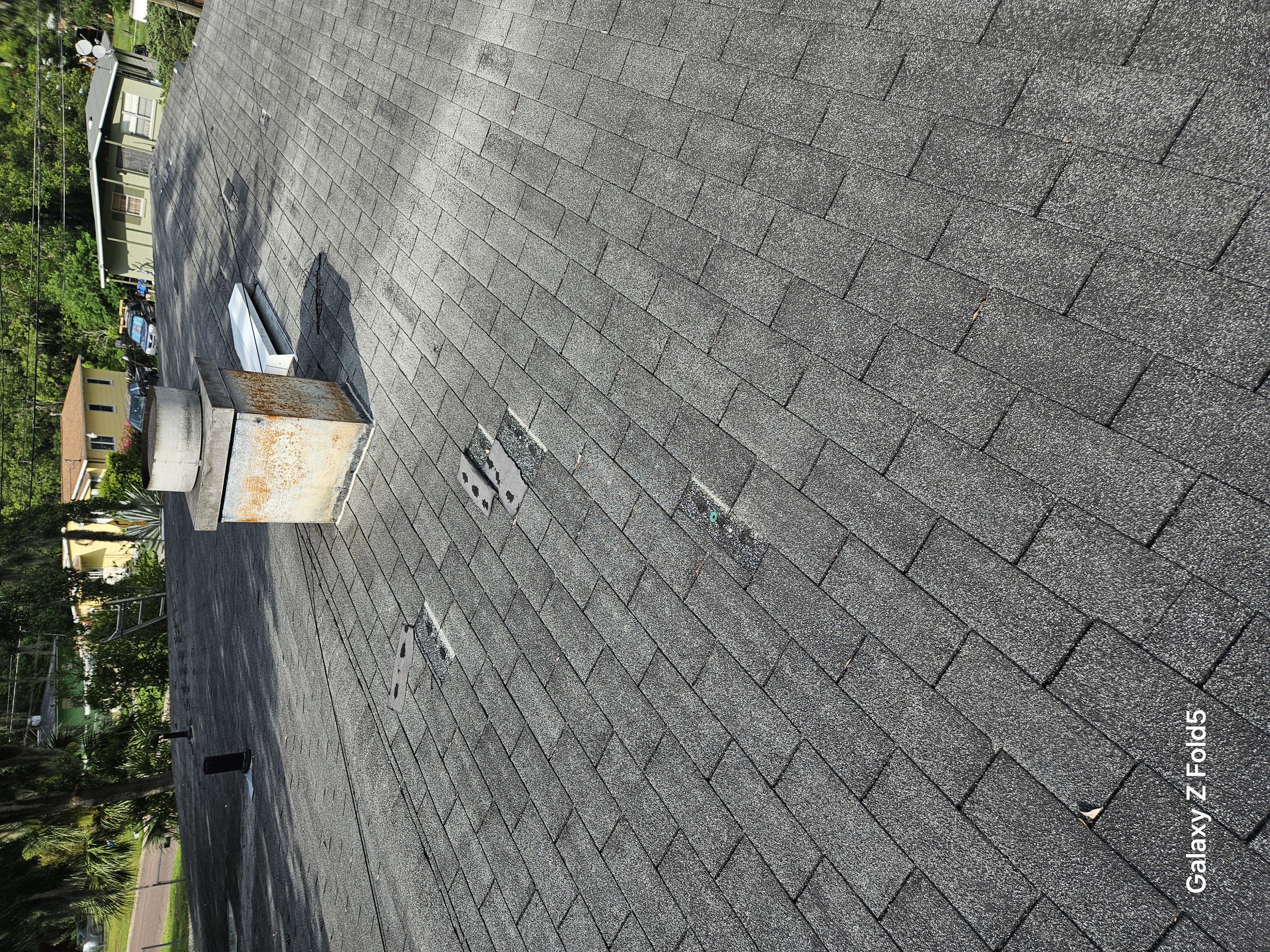
Inspectors look for curling, cracking, lifting, missing shingles, and granule loss—early indicators of roof failure.
2. Flashing Integrity
Flashing around chimneys, vents, skylights, and roof valleys is checked for corrosion, separation, or seal failure.
3. Roof Decking Stability
Soft spots or sagging areas may indicate moisture intrusion or structural weakening beneath the surface.
4. Attic Moisture Levels
Inspecting the attic helps identify leaks that have not yet reached interior ceilings.
5. Gutter and Drainage Performance
Blocked or damaged gutters can cause water backup, leading to edge damage and roof leaks during storms.
6. Sealant and Penetration Points
Vents, pipes, and roof penetrations are checked for proper sealing and weather resistance.
Each of these components plays a role in how well your roof performs during hurricane season.
The Hidden Problems Homeowners Miss
One of the biggest risks in roofing is that many issues are invisible from the ground.
Common hidden problems include:
Loose shingles that temporarily reseal in calm weather
Small flashing gaps that only leak during heavy rain
Nail pops beneath shingles
Minor decking rot hidden under surface materials
Weak seal strips that fail under wind pressure
These issues often do not cause immediate leaks, which is why homeowners assume everything is fine—until a storm exposes the weakness.
By that point, the damage is significantly more expensive to repair.
Why Timing Matters Before Hurricane Season Peaks
Timing is everything when it comes to roofing in Florida.
Once hurricane season becomes active and storms enter the forecast, roofing contractors across Jacksonville become overwhelmed with emergency calls.
At that stage:
Inspection availability becomes limited
Repair wait times increase
Material shortages can occur
Emergency pricing becomes more common
This is why inspections should be scheduled early—ideally before the first major storm system develops in the Atlantic.
Early action ensures:
Faster scheduling
Lower repair costs
Better material availability
Reduced risk of emergency damage
Roof Inspections and Insurance in Florida
Roof inspections also play a major role in insurance protection and claims processing.
In Florida, insurance companies carefully evaluate roof condition before approving storm-related claims. If damage is found to be pre-existing or due to neglect, coverage may be reduced or denied.
A documented pre-season inspection provides:
Proof of roof condition before storms
Evidence of maintenance history
Stronger claim support if damage occurs later
Clear documentation for adjusters
This documentation can make a significant difference in claim outcomes after a major storm.
What Happens If You Skip an Inspection
Skipping a pre-season roof inspection can lead to serious consequences during hurricane season, including:
Unexpected roof leaks during storms
Interior water damage
Mold growth in insulation and drywall
Higher insurance claim disputes
Costly emergency repairs
Full roof replacement sooner than expected
Many homeowners only realize the importance of inspections after damage has already occurred.
How Often Should Florida Roofs Be Inspected?
In a climate like Jacksonville, roofs should generally be inspected:
At least once per year
Before hurricane season (recommended timing)
After major storms or wind events
When the roof is over 10–15 years old
More frequent inspections may be necessary for older roofs or properties in coastal areas exposed to salt air and stronger wind conditions.
What Makes a Roof More Vulnerable in Jacksonville
Several factors increase roof vulnerability during hurricane season:
Roof age over 15–20 years
Poor or outdated installation methods
Lack of maintenance history
Tree coverage or debris exposure
Previous storm damage not fully repaired
Low-quality roofing materials
Even a small weakness can become a major failure point during high winds and heavy rain.
How Morgan Conley Roofing and Repair LLC Helps Homeowners Prepare
At Morgan Conley Roofing and Repair LLC, we specialize in helping Jacksonville homeowners prepare for hurricane season with confidence.
Our inspection process focuses on identifying problems early so homeowners can avoid emergency situations later.
We provide:
Full roof inspections
Leak detection services
Roof repair recommendations
Storm readiness evaluations
Emergency roofing services if needed
Our goal is simple: protect your home before problems become expensive.
Final Thoughts
A roof inspection before hurricane season is one of the most important steps a Florida homeowner can take. It is not just about identifying damage—it is about preventing it.
Small issues that go unnoticed in calm weather often become major failures during storms. A professional inspection ensures your roof is ready before those conditions arrive.
If you are unsure about the condition of your roof, the safest and most cost-effective decision is to have it inspected before hurricane season reaches peak activity.
https://morganconleyroofing.org/hurricane-roofing-guide-for-jacksonville-fl